
OUR FIGHT
The fight for economic stability
Caltech Graduate Student Workers and Postdocs contribute materially and intellectually to the world-class teaching and research that brings millions of dollars into this institution each year. Our wages and benefits not only lag behind peer-research institutions, they also do not reflect our research contributions. To exacerbate this disparity, parents, international scholars, and first generation scholars face an outsized financial burden as the cost of living continues to rise. We’re fighting for increased wages, but we’re also fighting for financial support for international scholars and subsidized healthcare and childcare. Postdocs and GSWs at Caltech deserve a contract before a Trump administration can take effect.
Top Pay for Top Work
Caltech GSWs and Postdocs do industry-leading research everyday. Why, then, don’t we receive an industry-leading salary? In 2023, our grants, contracts, and teaching brought in $541 million in revenue or 56% of all revenue at Caltech. Yet, GSWs and Postdocs still receive industry-lagging wages. The current GSW minimum salary is $46,500; for Postdocs the minimum salary is $70,264.
According to the MIT Living Wage Calculator, the current LA County livable wage for an adult with no dependents is $55,385 before taxes. This number goes up substantially as dependents are considered. An initial bargaining survey reported that 61% of the 590 respondents are currently rent burdened (that is, more than 30% of their income goes to rent). Despite the rising cost of housing, Caltech administration has not yet responded to our initial wages proposal from June. The union (or union-prevention wages) shown get closer to but do not yet meet a $55,000 salary for GSWs.
How will Caltech pay for our wage increases?
In the past, the Caltech administration has paid for wage increases without additional fundraising or burden to our advisors. For the big 2022 raise, they simply reduced the tuition rate at Caltech for federal funds (which represent the majority of P.I. grant funding). The maximum cost of our proposals for wages, healthcare, childcare, and international scholar visa renewal reimbursements is approximately 18% of Caltech’s endowment’s unrestricted funds (as of fiscal year 2023), and is less than the returns on investment earned each year on these unrestricted funds (using the 10-yr average 8% APY from Caltech’s publicly available 2023 Endowment Report to calculate interest).
The bottomline: Caltech administration could finance our contract at zero additional cost to our advisors and with zero additional fundraising to the Institute.
What we ultimately win depends on everyone’s engagement in the process.
Collective action and democratic decisionmaking does not occur spontaneously. It is built over time through countless one-on-one conversations between coworkers. In order to push for industry-leading wages, GSWs and Postdocs at Caltech must continue to build organizing structures together in our workplaces. Sign up to attend a brief organizer training to learn how to facilitate discussion among your lab around priorities and what protected concerted activity GSWs and Postdocs can take as unionized researchers to win.
Healthcare
Part of the bargaining process is codifying the good working conditions we already have, including the broad coverage provided to us by our current healthcare plans. While our benefits may match those at other universities, what we pay for them doesn’t. At peer institutions like Columbia and the University of California system, healthcare premiums for Graduate Student Workers are fully covered, reducing some of the financial burden on an already undercompensated population. If you’re a Graduate Student Worker without dependents, you pay $266 per term for medical insurance. Add dependents, and your costs are as high as $2,166 per term. For Postdocs, monthly premiums are $152–$186 for you alone, and $574–$707 if you have a spouse and children. Lower cost plans are only available if you’re willing to accept a large deductible—and if you’re not on a J-1 visa.
GSWs and Postdocs are fighting to improve access to healthcare by covering costly healthcare premiums that disproportionately affect international scholars and academic workers with dependents. Healthcare isn’t a luxury—it’s a necessity and a right.
As a student parent, having support for my family is paramount for my success in grad school. Childcare, health insurance, finances are all areas that I’ve had to struggle with securing while trying to balance my work. These issues affect all grad student parents, and I want to ensure we all get the support we need to be the best parents and researchers during our time at Caltech.
Health insurance is our biggest expense, and children are expensive. Especially for the first few years with a new child, every month you need new stuff. The current child stipend is not enough for this.
I take action to support my fellow grad student workers and postdocs, especially those who are financially burdened from things such as high healthcare and dependent costs. Everyone deserves a workplace free of harassment and discrimination, where we can focus on doing ground-breaking research!
Childcare
GSWs and Postdocs should not have to choose between providing for their children and having a fulfilling research career. Postdocs especially tend to be at a career and life stage in which they would like to have children. According to hundreds of conversations across campus, postdoc parents at Caltech do not feel that they have adequate financial resources for quality childcare. Childcare through Caltech costs around $2,000/month; in Los Angeles County more broadly, the average annual cost of childcare is approximately $15,000/year. And research has shown that the failure to provide support for childcare disproportionately impacts women in academia, often called the “leaky pipeline”. This is untenable when combined with the high cost of dependent healthcare.
Our proposal
- Maintains and expands the Caltech Childcare Assistance Program, which provides up to $5000 each year to families with children.
- Expands the Parent Support Program to all GSW and Postdoc parents. This would provide an additional taxable stipend of up to $10,000/year to families, plus an additional $7,500/year for each child under the age of six.
These proposals are not unreasonable or unprecedented. Columbia Postdocs won a lump sum $5,000 childcare payment into a Flexible Spending Account in their most recent contract, and University of Washington Postdocs established a $75,000 childcare assistance fund.
International Scholar Expenses
International scholars, who make up the majority of all GSWs and Postdocs at Caltech, experience an outsized financial burden in a number of ways. Visa fees, travel for visa renewal, a lack of work permits for spouses, and higher health insurance costs for international Postdocs all contribute to a more stressful experience. The link between employment stability and visa status also makes international workers vulnerable to exploitation. You can learn more about the fight for international worker protections here.
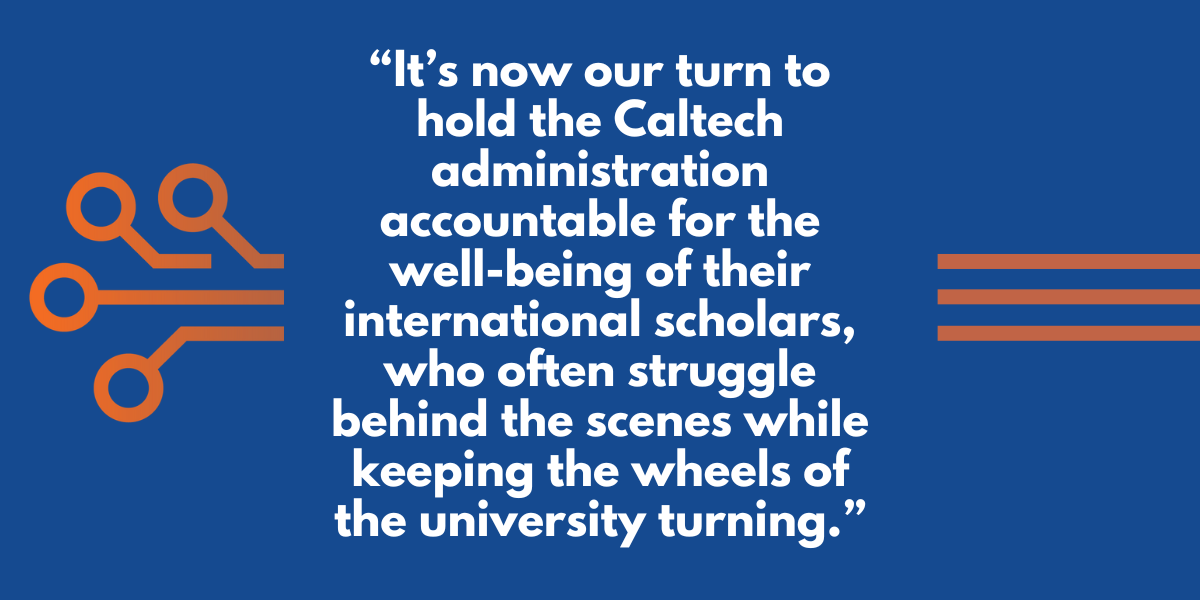
“Bargaining for Stronger Protections for International Scholars at Caltech” Click here to read the op-ed.
As an international student worker, especially in the current political scenario in the US, I have intimately faced multiple visa hurdles and have close friends who have to undergo huge side-quests to renew their visas. As an institution where over half of the workers are international, guaranteeing the bare minimum of reimbursement of visa fees and time off to renew our visas is necessary. We continue our fight for a better contract, which provides a sense of security to workers who have uprooted their entire lives to work and contribute to make Caltech a better research institution.
The fight for a strong union—won as of 11/22!
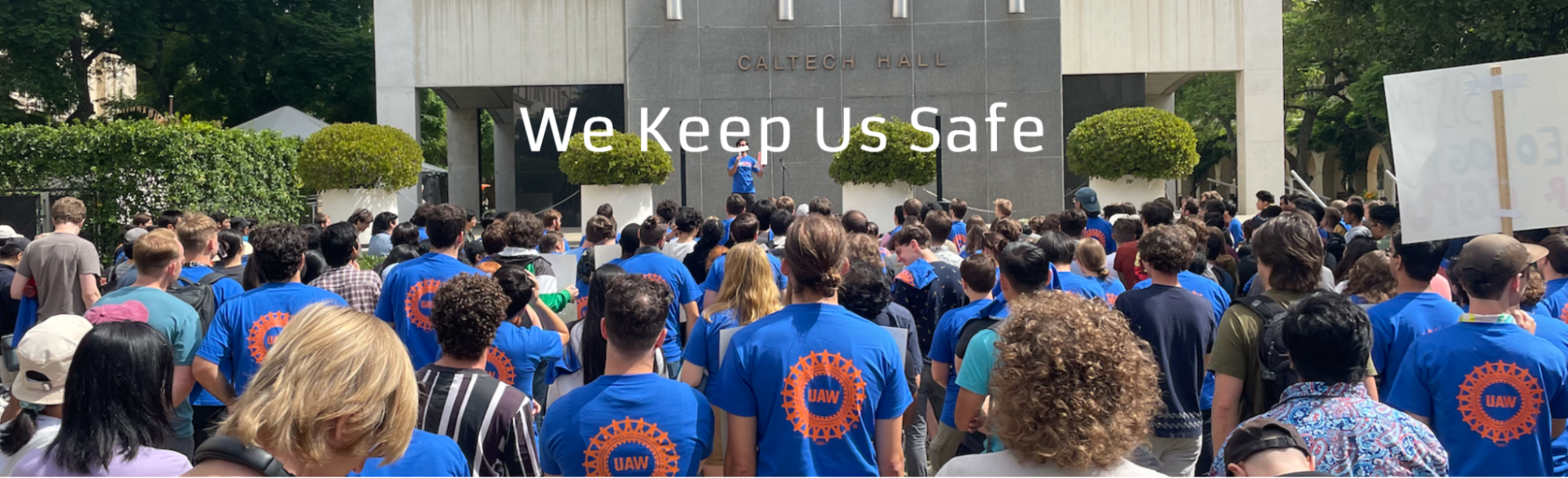
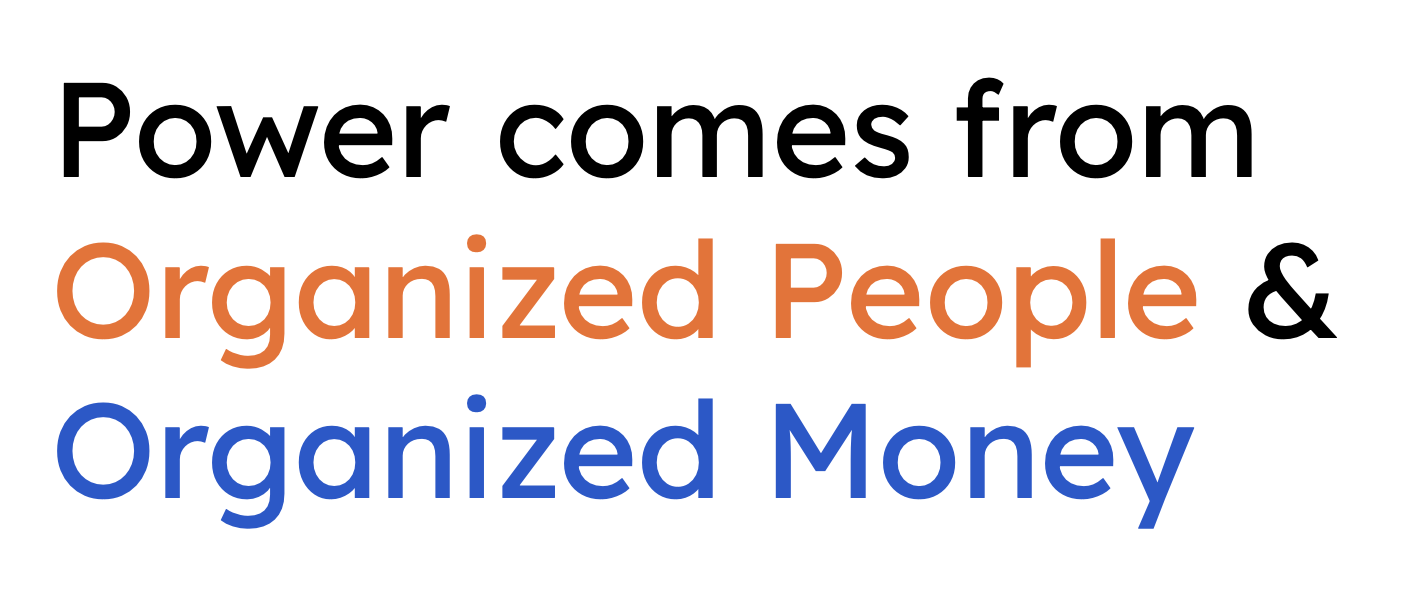
Caltech Graduate Student Workers and Postdocs are demanding a strong agency shop to enforce the contract we are collectively fighting for. Power comes from organized people and organized money. Our union is the only legal means we have to challenge the imbalance of power between GSWs and Postdocs and the Caltech administration. We know that Caltech is well-resourced, and in turn, we must have the resources to level the playing field.
Agency shops are unionized workplaces where workers have a choice in whether or not they become union members. With an agency shop all workers who are covered by a union contract pay a small portion of their paycheck to contribute financially to their union in the form of union dues (or fees, for non-members). Workers have a real say in our working conditions, and union security rights provide GSWs and Postdocs the power to enforce our new contract collectively.
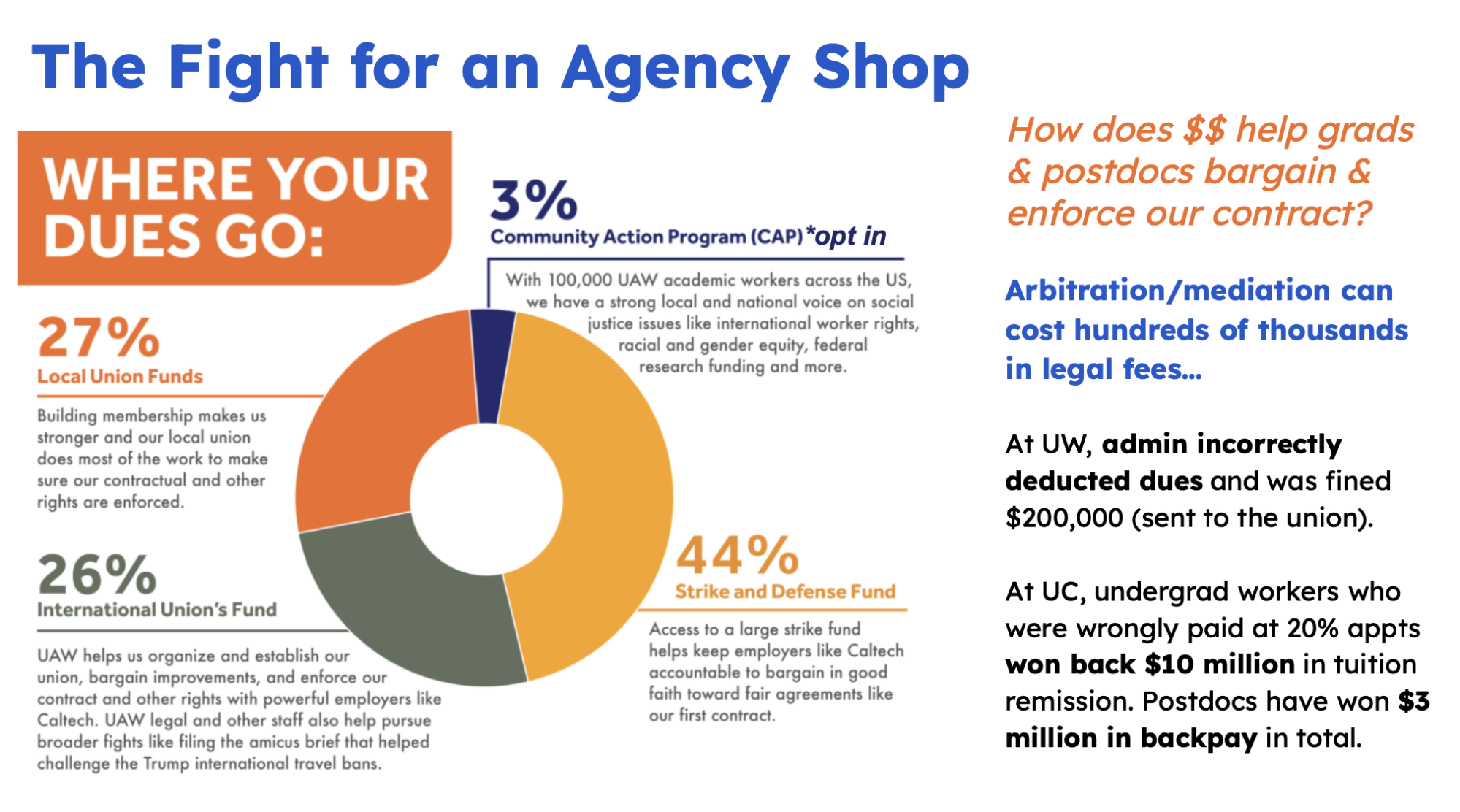
A worse alternative would be an open shop: all GSWs and Postdocs benefit from our new contract, but no one has to chip in for the costs of representation. This would weaken our power by denying us the resources to address violations of our contract and build a strong union for the next set of contract negotiations. Without an agency shop, our industry-leading wins like the guaranteed timeline of 90-days to mediate bullying, harassment, and discrimination cases will mean less. Our union is strengthened by an agency shop.
By having strong contract enforcement mechanisms, UAW members at other universities have successfully kept each other safe:
- UC San Diego: An international postdoc who was seven months pregnant was fired by her PI after raising concerns about data falsification. Her coworkers rapidly organized and were able to prevent her deportation to China. She was reinstated to a new position with full restoration of healthcare benefits.
- UCLA: A pregnant postdoc was bullied by her PI to such a degree that it was affecting the health of her unborn child. Through the grievance process, interim safety measures were imposed that required the PI to alter his schedule to avoid crossing paths with the postdoc.
- UC Riverside: Two postdocs who were being harassed for not publishing fast enough were given new appointments with department funding after the successful implementation of the grievance process and a march to the department chair’s office led by dozens of their coworkers.
- UC Berkeley: An international postdoc’s PI attempted to fire them for no justifiable reason on Christmas Eve. Because of the grievance procedure outlined in the union contract and an organized Chemistry Department that was ready to protest on behalf of the postdoc, the PI had to rescind the notice and sign a no-contact order and non-disparagement agreement. The postdoc was able to move to a different lab and finish their work at Berkeley.
UAW academic workers have also worked together to:
- Stop the “fixed duration of status” rule from going into effect
- Expand and extend Optional Practical Training (OPT)
- Oppose the 1-year period of validity for Chinese entry visas
- Organize information sessions in response to changing immigration policy under Trump
- Extend the initial postdoc employment contract to a 2-year period to reduce visa costs and provide immigration stability for scholars and their dependents
- Fought pandemic-era ICE-deportations of academic workers
- Joined lawsuits to protest the Muslim ban
- Joined lawsuits against Betsy Devos’s Title IX changes
Currently, whether you have a life at Caltech with adequate leave, reasonable academic expectations, help renewing your visa, and a healthy workplace is directly determined by whether you have a good relationship with your advisor. I’m fighting for a better contract because I want that to be the standard for all Caltech workers.
Mass Action Works
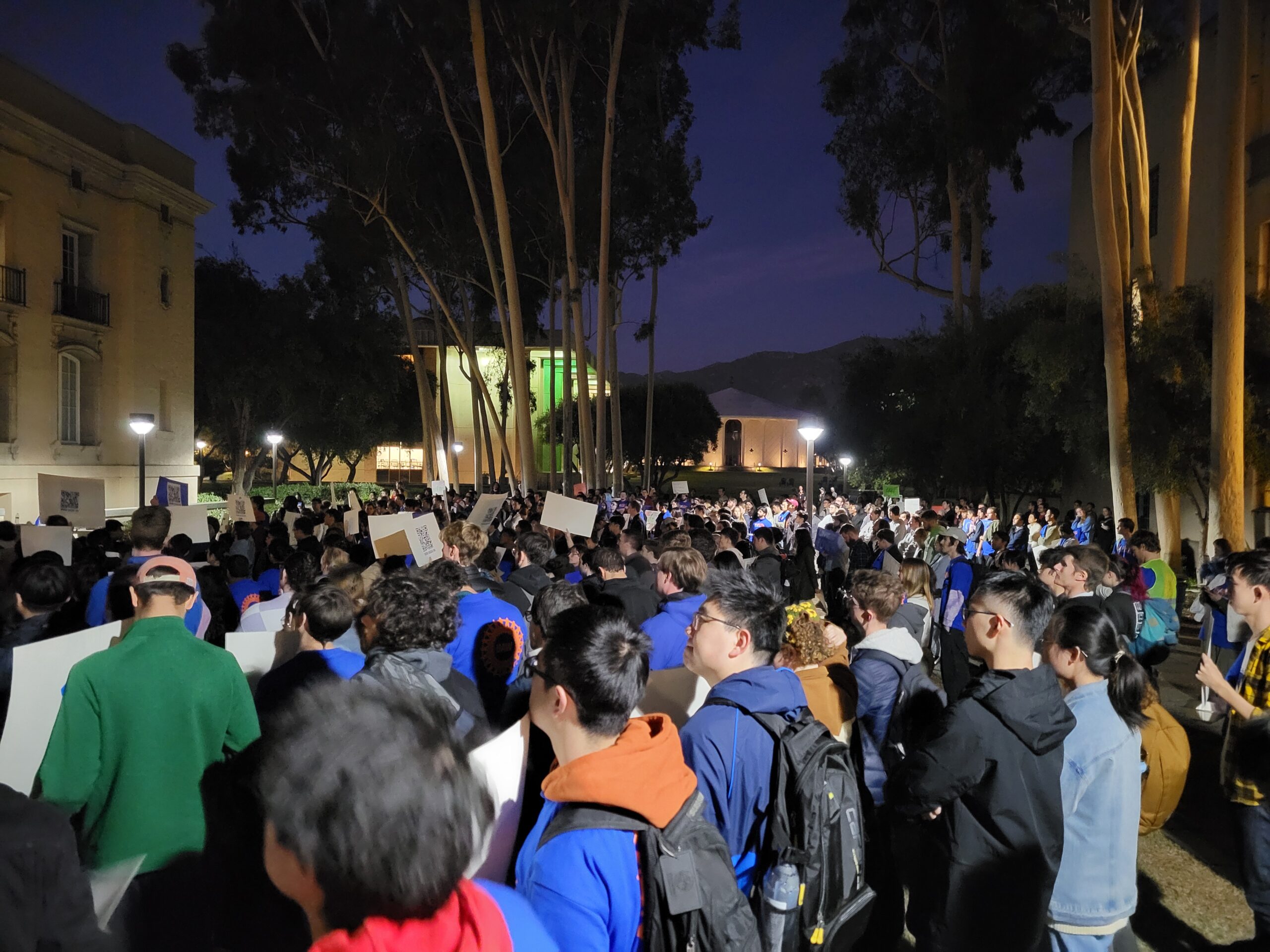
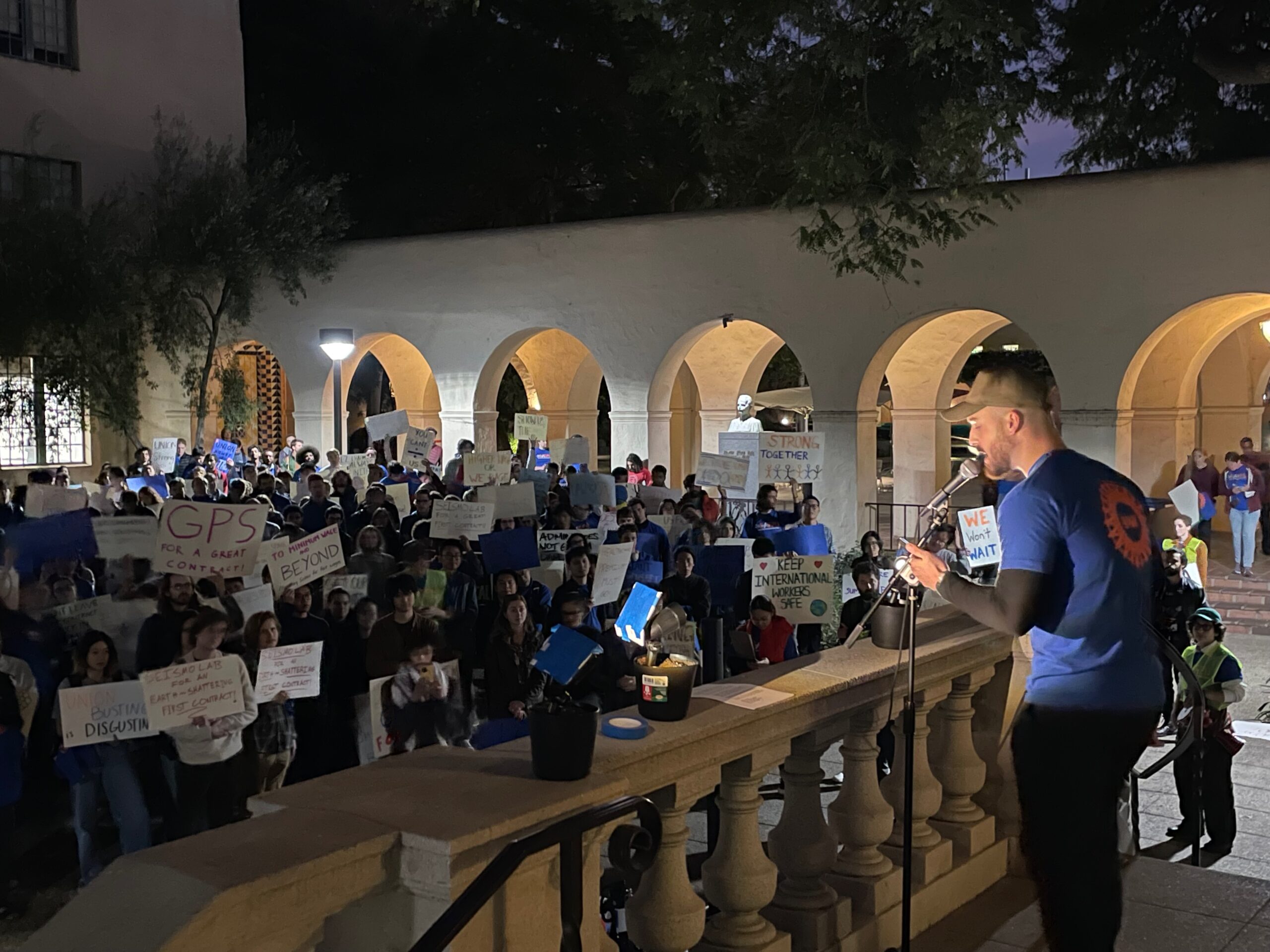
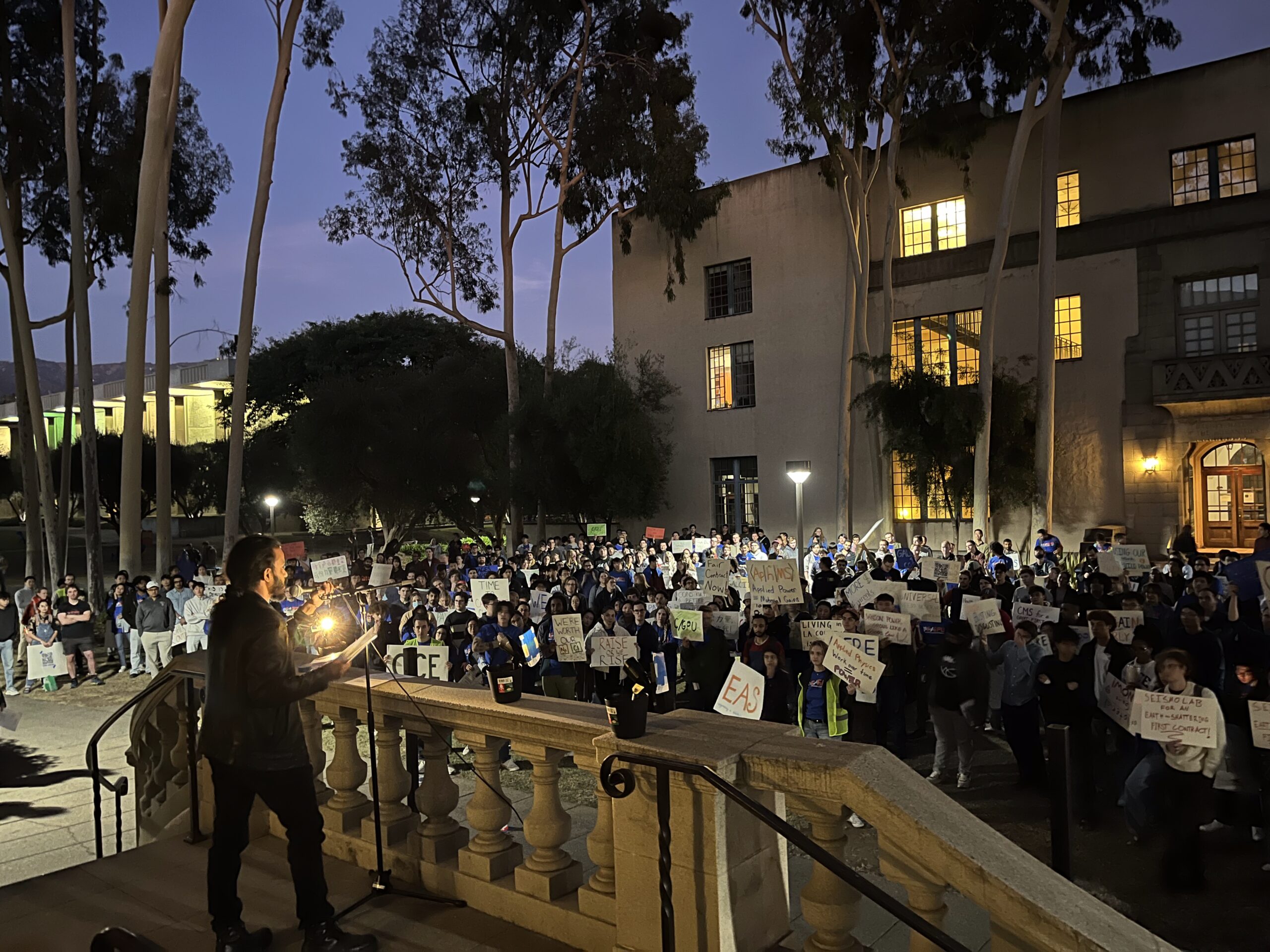
Hundreds of GSWs and Postdocs call for a Strike Authorization Vote during a
Mass Membership Meeting
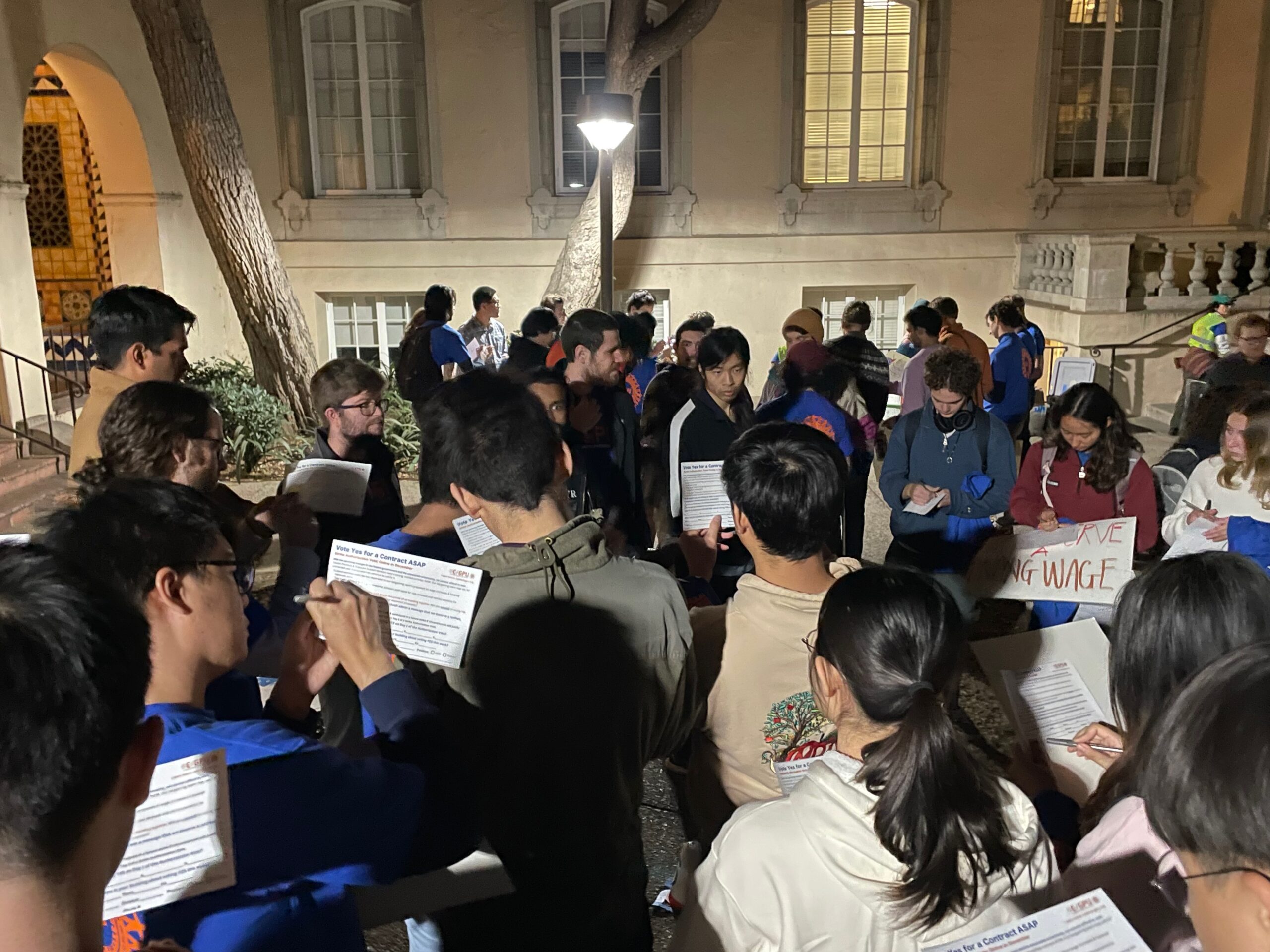

Within 48hrs of the meeting, Caltech admin:
- Responded with their first healthcare proposal
- Doubled the number of scheduled bargaining dates through January (6→13 days)!
- Proposed an Agency Shop in their first counter proposal on Union Security, which is nearly unheard of in contract negotiations
This opened discussions on a major economic article and got us that much closer to a ratified, strong first contract. The proof is at the table: collective, mass action still works.
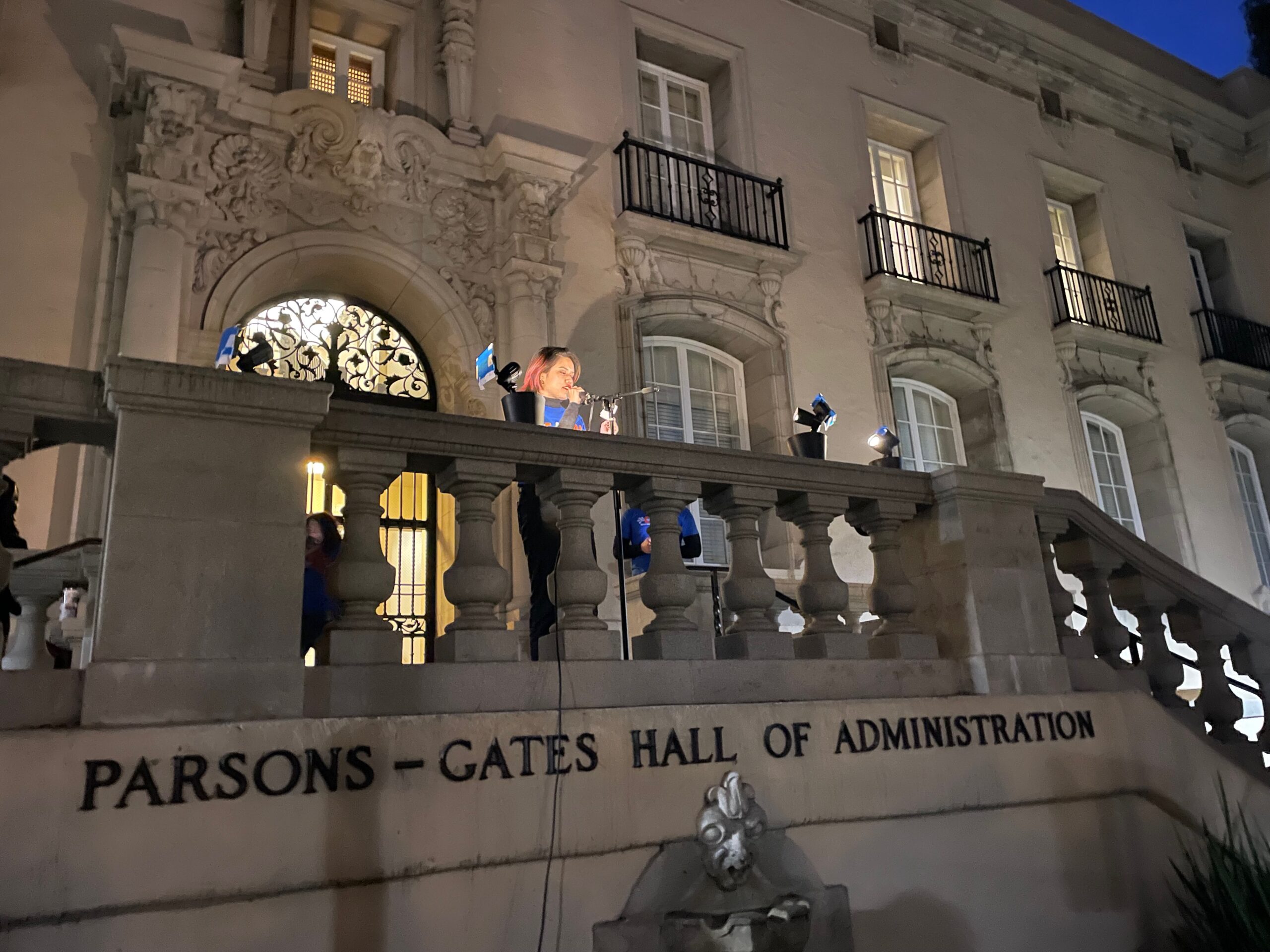
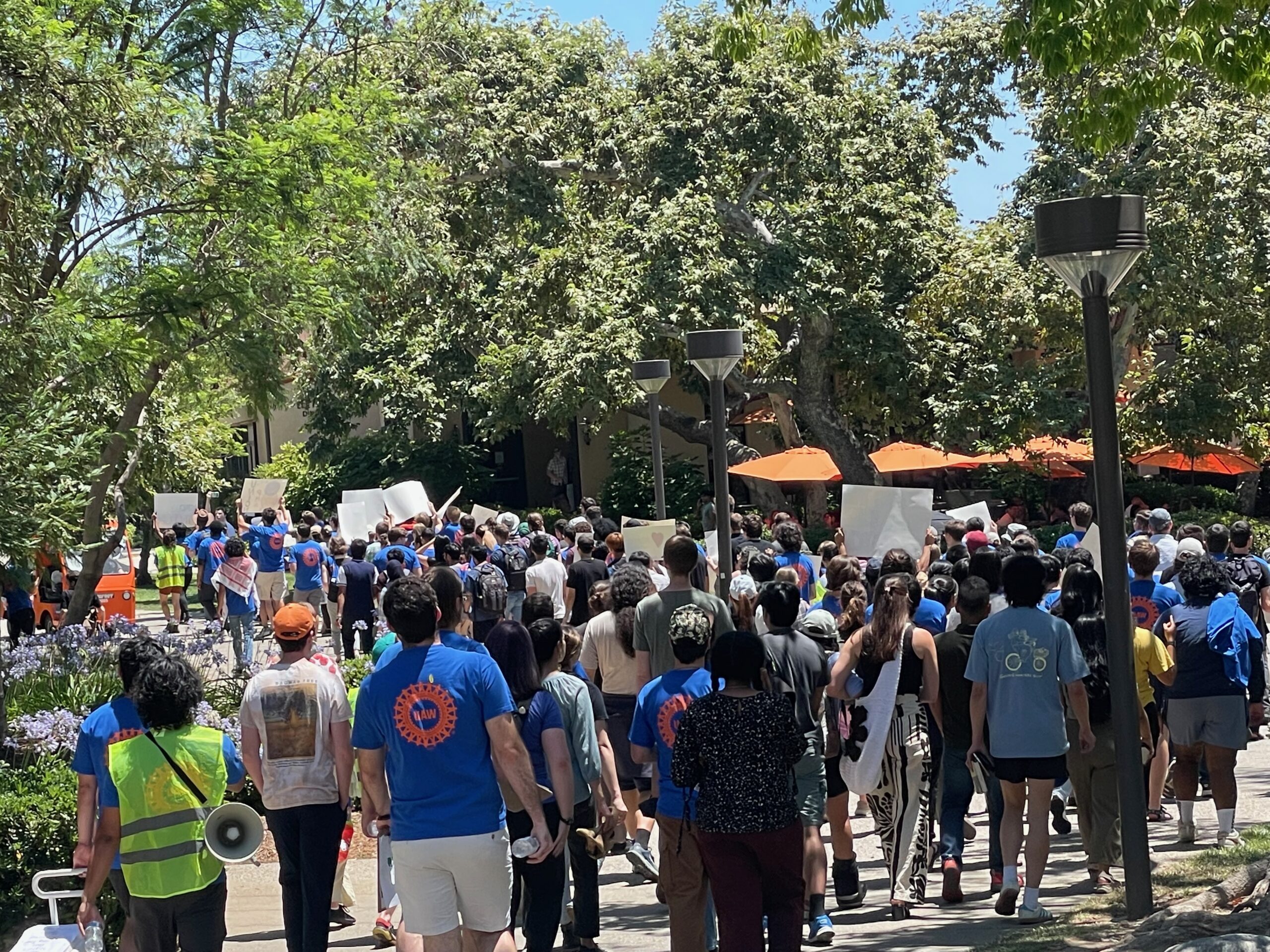
On November 19th, GSWs and Postdocs made history at Caltech. SIX HUNDRED of us gathered on Parsons-Gates Lawn in front of the administration building to send a clear message that we are willing to fight for a fair contract now. We heard from international scholars who expressed their concerns over the upcoming Trump administration, learned about the debt incurred by parents who have been provided insufficient financial support, and during the open mic heard from G1s who are committed to winning a strong contract that will affect them for the majority of their time at Caltech. Our elected bargaining team members wrote a resolution calling for a Strike Authorization Vote (SAV) that was overwhelmingly approved.
The SAV will take place online on December 4th and 5th. Learn more here: Strike Authorization Vote FAQ.

The fight for a safe and secure workplace—we already won!
We have already made major strides in improving our working conditions. Multiple tentative agreements enshrine a series of transformative protections, including:
- Guaranteed two-year initial appointments for all Postdocs, which means two-year initial visas.
- Strong protections against harassment and bullying, including processes that do not rely on the Title IX office.
- A new grievance process that provides us with enforceable timelines, the right to peer advocacy, and access to neutral, third-party arbitration. Importantly, this process can be applied to instances of discrimination, harassment, or bullying in the workplace.
- Health and safety guidelines that ensure students are protected in the lab and in the field.
Check out the What We’ve Won page for more details and information on why these improvements matter!
Last Friday, 300 Caltech Postdocs and Graduate Student Workers gathered on campus to send a powerful message to the Caltech admin: we need stronger protections against bullying and harassment, and for international workers. The Title IX office is not effective protection. 🧵 pic.twitter.com/s9QDbjPaW7
— Caltech Grad Students & Postdocs United (@cgpu_uaw) July 25, 2024
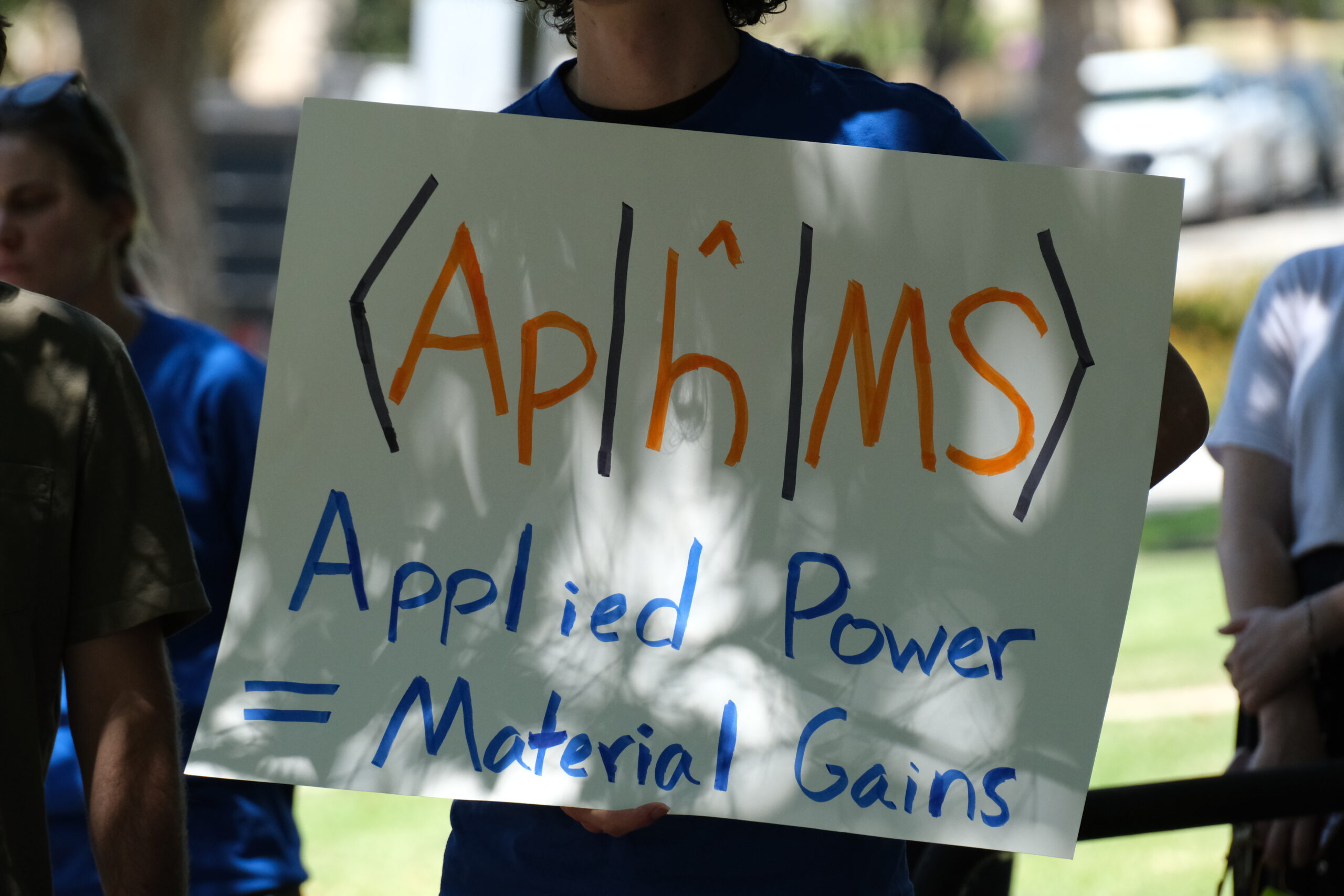
In response to Caltech administration’s refusal to agree to protections against bullying, harassment, and discrimination, over 300 of us rallied on July 19th outside of Parsons-Gates Hall of Administration. In an early workplace survey, 46% of surveyed workers witnessed or experienced discrimination, harassment, or abuse at Caltech. From every division, brave GSWs and Postdocs powerfully shared their stories of being threatened or bullied by their supervisors, and the failure of existing structures at Caltech (including the Title IX office) to do anything about it. We then marched to the Title IX office and taped our list of stories with clear expectations for the bargaining table to the door.
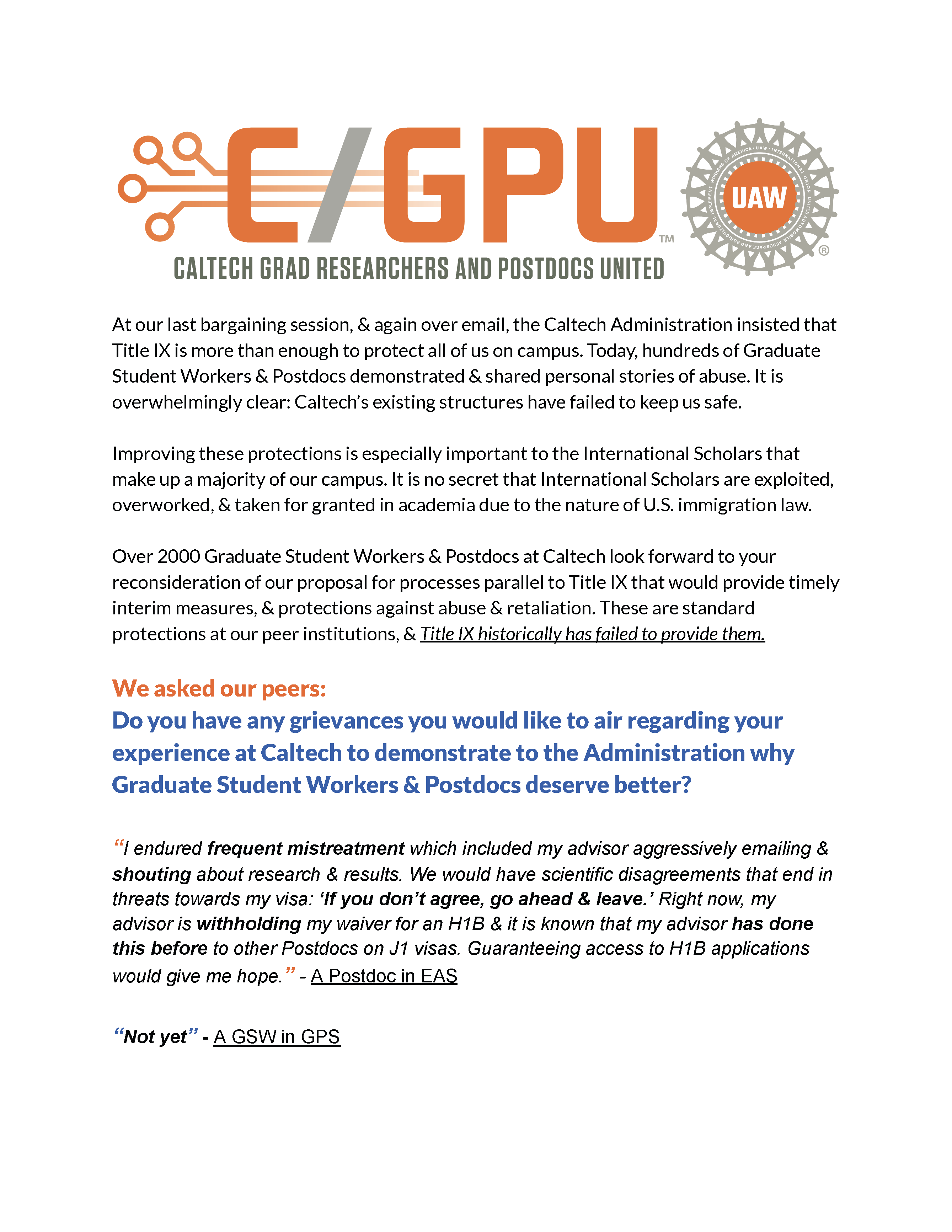
Together, Postdocs and GSWs demonstrated the clear overwhelming need for change at Caltech and in turn won industry-leading protections. Following our We Keep Us Safe rally, over the course of six back-to-back bargaining sessions from July 24-26 and July 29-31, Caltech administration agreed to our demands. Instead of 14 month or 16 month Title IX cases, often with unsatisfactory experiences, GSWs and Postdocs can now choose our union process in parallel with Title IX and with at most 90 days to mediation.
Over 100 of us showed up to the bargaining sessions June 17-18th as our bargaining teams presented healthcare and wages proposals. During those sessions, six new tentative agreements were reached, including those addressing our new grievance process, health and safety, and a first-of-its-kind free speech article that protects the right to mass action. These wins are a direct result of mass engagement from all of us.
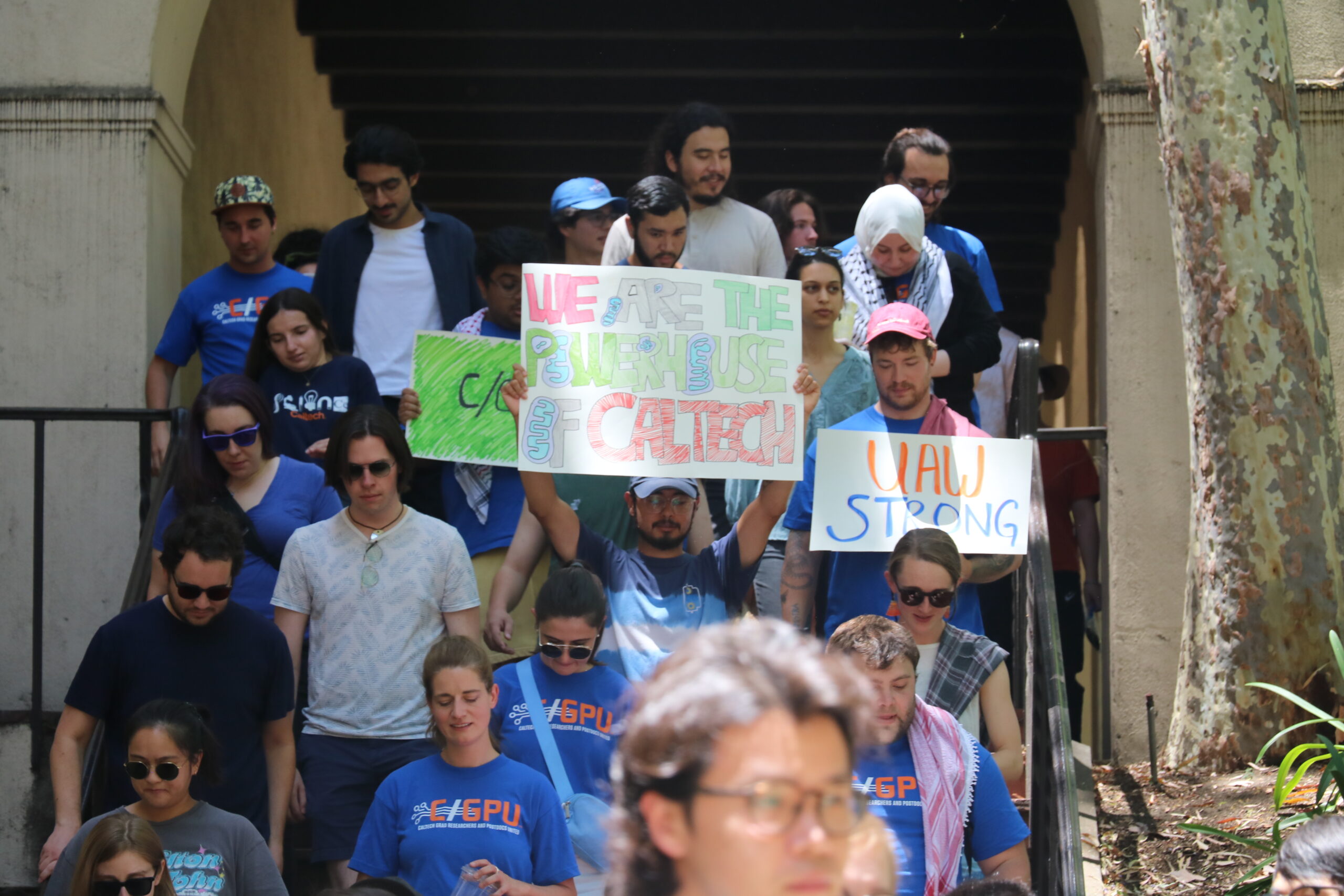
Over 100 Grad Student Workers & Postdocs came out to collective bargaining to demonstrate support for our Wages and Healthcare proposals, and stand up against Caltech admin’s recent bad faith bargaining.
— Caltech Grad Students & Postdocs United (@cgpu_uaw) June 22, 2024
This is how we exercise power. ✊ pic.twitter.com/DB1AB8QsMX