
International researchers have the same legal right to join unions as US citizens
Research is an international endeavor; the entire scientific community benefits from just policies that treat international scholars with dignity and respect, irrespective of their place of origin.
As international scholars, we face unique challenges and greater precarity due to our status as visa holders. This uncertainty comes from multiple sources—changing Federal immigration policies, challenges finding affordable housing and healthcare, the financial burden of visa renewal, and bureaucratic university processes. Recent surveys conducted by Nature have also found that international researchers, due to the inherent instability of employment-linked visas, feel more vulnerable and are more likely to face certain types of abuse.
We Stand Up for International Researchers
After our successful We Keep Us Safe rally on July 19th, Graduate Student Workers (GSWs) and Postdocs won industry-leading, historic protections against bullying, harassment, and discrimination. Thanks to brave workers who shared experiences of having their visa status threatened by their supervisors, exploitation of vulnerable international scholars will no longer be acceptable practice. Postdocs also won guaranteed two-year initial appointments, which allows for two-year initial visas and alleviates a great deal of uncertainty for international postdocs.
These wins are only the beginning. The Graduate Student Worker and Postdoc bargaining teams have proposed an additional set of protections for international workers, including:
- Guaranteed leave for visa renewal for international scholars and their families
- Reimbursements for visa renewal and other administrative or legal fees related to immigration
- H1-B sponsorship for all postdocs who have been employed for more than one year
- Full coverage of health insurance premiums for all GSWs and Postdocs and their dependents
Though these proposals were sent to Caltech administration in June, we have not yet heard back from the Institute on any portion of them. You can read more about international scholar experiences here, and click here to get involved in the fight for these common-sense protections.
International Workers are Legally Protected
Under US law, international postdocs and graduate student workers have the same rights to join and participate in unions as US citizens. This includes anyone on a F-1, J-1, or H-1B visa. Tens of thousands of international postdocs and students are part of unions already, including those at the UC system, University of Southern California, MIT, Harvard, Columbia University, and University of Washington.
Many protections exist to ensure the rights of international scholars to participate in union actions, including strikes, and there have been no reported instances of international scholars facing negative consequences to their visa status as a result of going on strike. Any action taken by Caltech against international scholars for participating in union activity, including a strike, would be considered retaliation and is illegal under the National Labor Relations Act.
Beyond Caltech
Other academic unions have won contractual benefits for international scholars similar to the ones we are asking for:
- MIT won a $1,200 reimbursement for visa-related costs. Their contract also includes new protections for international grads, like timelines within which the International Student’s Office must respond to inquiries.
- Harvard grads won a $100,000 annual fund to reimburse some of the costs associated with immigration and maintenance of legal working status within the United States.
UC’s recent contracts guarantee days off for visa-related appointments and guarantees remission of the Non-Resident Student Tuition fee for PhD candidates.
Beyond the Contract
UAW workers have come together outside of contract bargaining periods to keep their international communities safe. They worked to:
- Stop the “fixed duration of status” rule from going into effect
- Expand and extend Optional Practical Training (OPT)
- Oppose the 1-year period of validity for Chinese entry visas
- Organize information sessions in response to changing immigration policy under Trump
- Extend the initial postdoc employment contract to a 2-year period to reduce visa costs and provide immigration stability for scholars and their dependents
- Fought pandemic-era ICE-deportations of academic workers
- Joined lawsuits to protest the Muslim ban
- Joined lawsuits against Betsy Devos’s Title IX changes
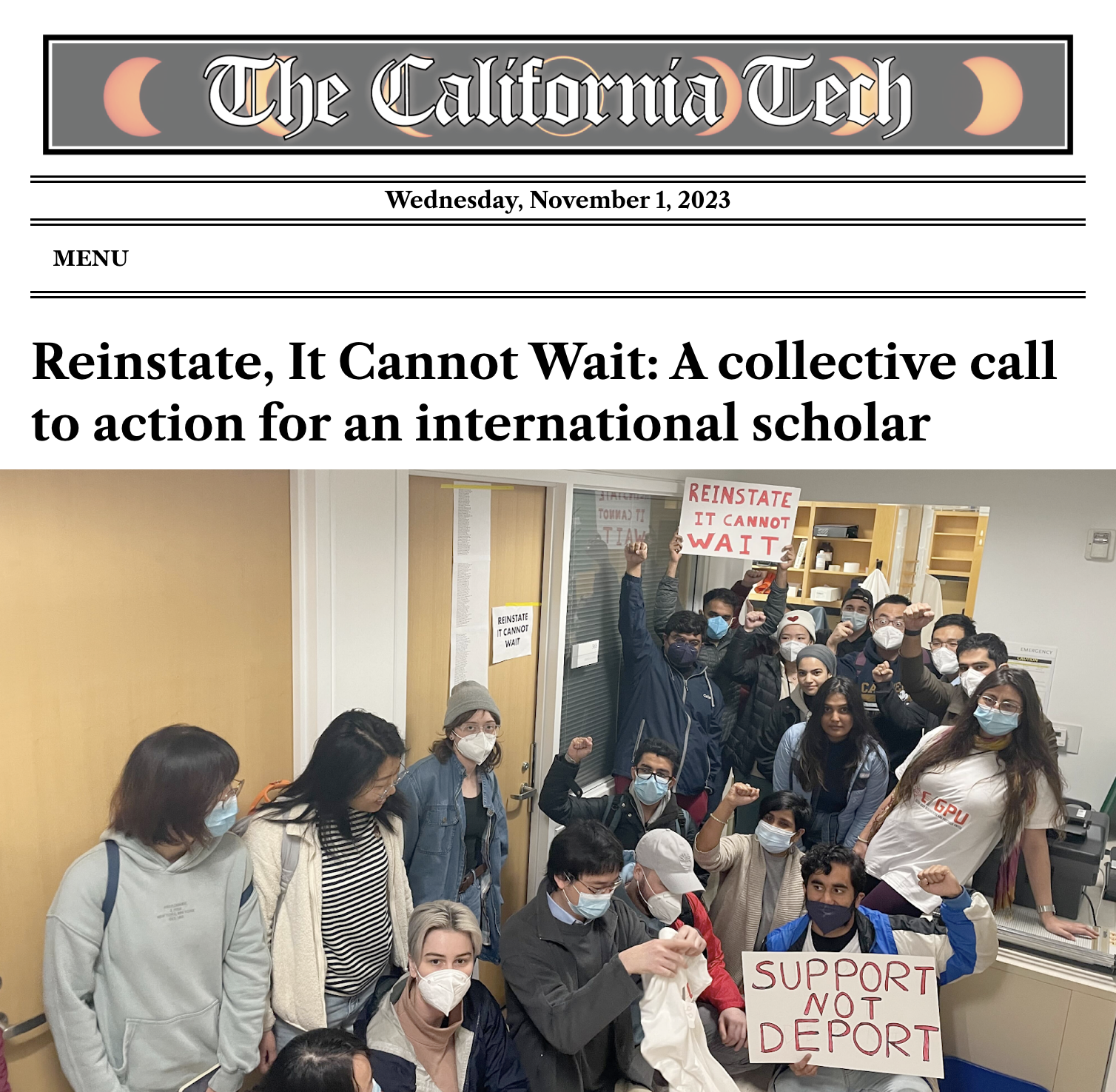
“During my time here, I have personally experienced threats to my safety and health on an improperly planned field trip, after which it also turned out to be extremely hard to acquire an acknowledgement of the incident on a divisional or institutional level. I have also witnessed my cohorts struggling when they were treated improperly and yet had no way to defend themselves. Some of whom ended up leaving Caltech. A union will provide one with legal ways to defend ourselves and talk to the administration equally when things like these happen again.”
“A union provides a democratic way for every grad and postdoc to express their needs and issues. Right now the only way to change anything is by requesting the higher authorities, who are under no obligation to actually do anything. A union provides a weight to these voices, it allows for a more fair and reasonable discussion between the administration and the students as equals. A lot of us are very privileged to have guides and peers who encourage and support us, they enable us to do well in both our professional and personal lives. But unfortunately, not every student at Caltech is so lucky.”
How do academic unions help with visa and immigration issues?
- MIT won a $1,200 reimbursement for visa-related costs. Their contract also includes new protections for international grads, like timelines within which the International Student’s Office must respond to inquiries.
- Harvard grads won a $100,000 annual fund to reimburse some of the costs associated with immigration and maintenance of legal working status within the United States.
- UC’s recent contracts guarantee days off for visa-related appointments and guarantees remission of the Non-Resident Student Tuition fee for PhD candidates.
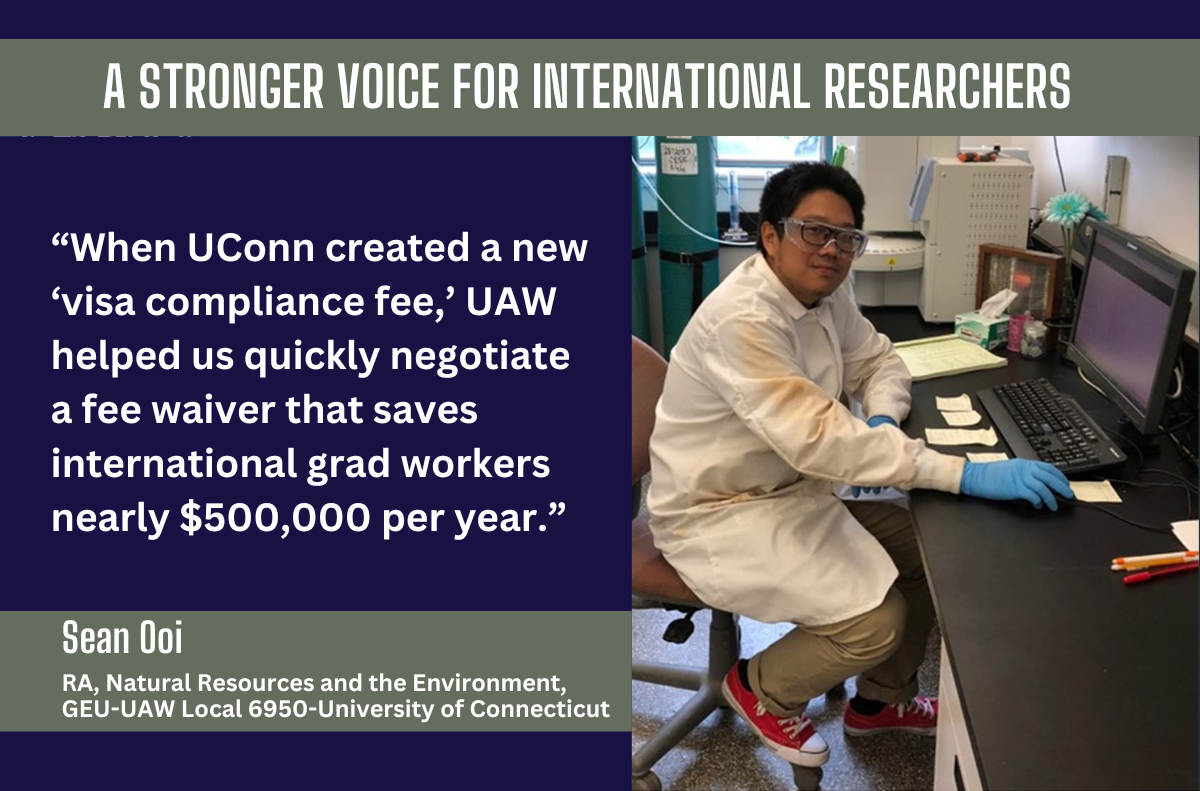
“Living in Southern California is expensive, and right now, graduate student researchers and postdocs have little concrete say in how decisions about our salaries, healthcare, and benefits are allocated from year-to year. I believe a union is the best route to creating a more democratic workplace that benefits researchers from all backgrounds, helping to close existing gaps in equity and making working conditions better across our institute.”
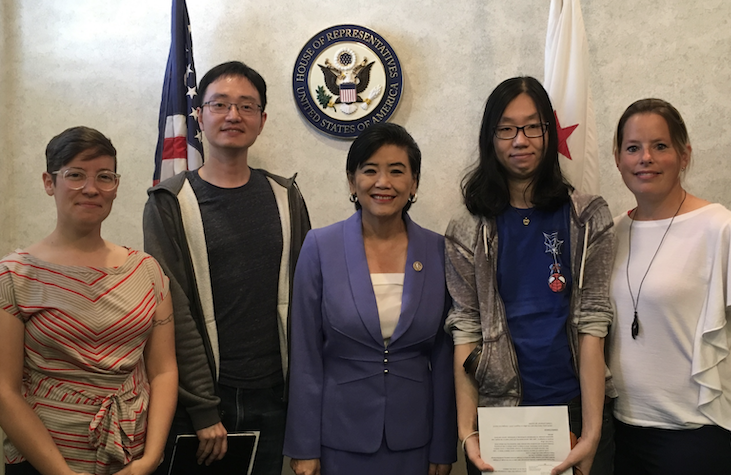
UAW Local 2865 and UAW 5810 union members with Congresswoman Judy Chu discussing her Dear Colleague Letter in support of Chinese international students at her office in Pasadena, 2018.